Class: VI to XI
Date: February 2nd & 3rd, 2017
Venue: Rann of Kutch, Kutch District, around 210 kms from Vadodara
Organizer: Ahmedabad Nature Lovers Association [Anala Tours and Travels]
Duration: One night and two days
No of students: 118 / 193 paid for the tour.
No of teachers: 9
- Ms. Sunanda Dattetreya - Team Leader & Class teacher of Grade 8
- Ms. Seema Desai - Incharge teacher of Grade IX
- Ms. Meghna Bhakta - Incharge teacher of Grade X
- Mr.Sanchit - Incharge teacher of Grade XI
- Ms. Sabeena Pillai - Incharge teacher of Grade VI B
- Ms. Shrutika Dongre - Incharge teacher of Grade VI A
- Ms. Durgeshwari Gusein - Incharge teacher of Grade VII A
- Ms. Varsha Sawant - Incharge teacher of Grade VII B
- Mr. Ashish Jha - Assistant teacher
Guide: Mr. Ashok Chavda and team
Details of expenses:
Class VI to XI
Amount collected : Rs.2500/-
No of students : 118
Total amount collected : Rs. 2,95000/-
Paid to Anala : Rs.2400/- per student, total paid-Rs.2, 83200/-
School Share : Rs.11, 800/-
Breakfast provided (of 2 days) : Bread butter, muffins, frooti, poha, paratha, dhokla, chutney, fruits, milk
Lunch provided (of 2 days) : Tandori roti, palak paneer, mix vegetable, salad, jeera rice and dal, sweet boondi, Manchurian, carrot halwa
Dinner : Noodles, veg. fried rice, soup and manchurian
High Tea : Dry mung dal and five star chocolate (at desert site)
Objective of the Educational camp:
- To enable the learners to have a real life experience of being at one of the reputed largest salt deserts in the world.
- To enable the learners to see the Luni river, the Banas river and the Rupen river draining into the desert from the north east and east of Rajasthan.
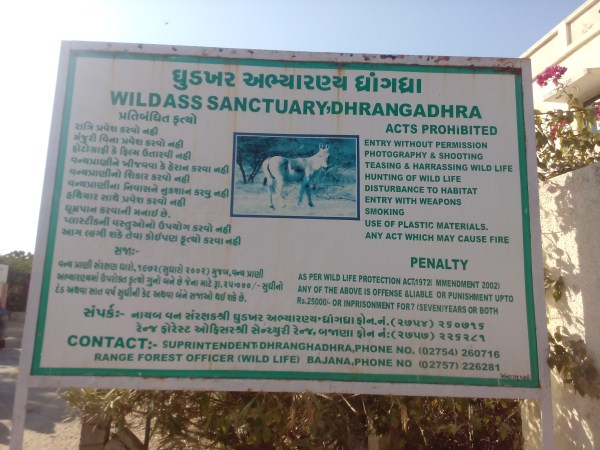
- To enable the learners to see the wild life sanctuary and the breeding ground for some of the largest flocks of greater flamingos and Indian wild ass during the trip.
- To enable the learners to know that the habitats are vulnerable to cattle grazing, fire wood collection and salt extraction operations.
- To enable the learners to know about and visit various ecologically rich and wildlife conservation areas of the Kutch district.
- To enable the learners to know about the local culture, cuisine and hospitality of the inhabitants.
- To enable the learners to know about the unique handicrafts of Kutch especially the various types of embroidery such as Rabari, Ahir, Sindhi, Banni, Mutwa etc.
- To enable the learners to know about the salt pans and salt manufacturing industries of Kutch.
- To enable the learners to create an environment conscious society through various outdoor based activities and thus realizes the beauty of living with nature.
- To enable the learners to realize that the greatest wisdom is kindness, it doesn't matter how many times one gets knocked down, it only matters how many times one gets up, through outdoor activities conducted by the Anala group.
- To foster strong bonds of friendship among students and teachers.
- To create an appreciation of nature in students.
- Acquire useful application of the “inquiry based learning approach” where, data and information are converted into useful knowledge.
- To provide students with real life experiences outside school.
Pre Educational camp activity:
- Students were made aware about different activities to be performed by them in the educational trip.
- Learners were informed the previous day to reach the school by 6:45 a.m in the morning.
- Learners were informed to be well disciplined and adhere to the rules and regulation of the school.
- Learners were informed to understand the gestures and behave accordingly not only at the picnic site but also throughout the journey such as, when the teacher raises one hand to form a common line, at two hands; the group has to move to the in-charge teacher.
- Learners were informed about not littering either in the bus or the picnic sites and use the garbage bags installed both in the bus and at the sites.
- Teachers were instructed to be very vigilant and as when required to do the headcounts to ensure the safety and security of every student.
- Learners were instructed not to carry any electronic gadgets including their mobiles phones and if they carry their phones, the same will be confiscated and if found carrying camera, it would be solely at their own risk.
- Availability of water, breakfast and food were taken care of as per the strength of students.
- Parents were pre-informed about trip time, departure and arrival time through Between Us portal.
- Head counts as per the final list of participants were done before departure of buses from school and also before leaving the place of education trip.
- First Aid box and its usage by bus attendants and teachers were taken care.
Educational camp activities:-
- Learners and a team of teachers started their journey at 7:35 a.m.
- All the buses halted for breakfast at Sahayog hotel at 9:30 a.m
- Students reached the destination at around 12:35 noon.
- Students were divided into groups of 7 members with a team leader.
- At 1:15p.m., all the students relished the food to their hearts content.
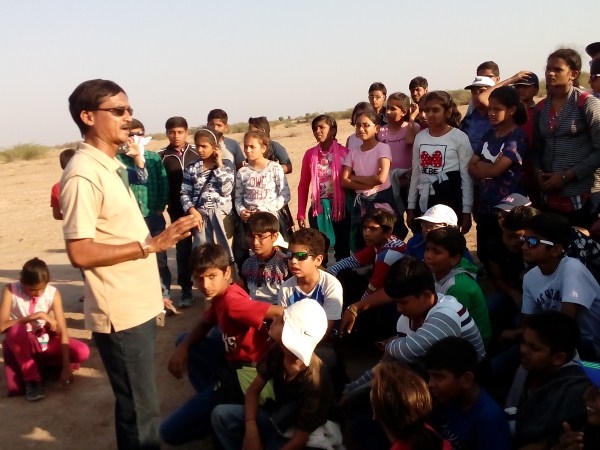
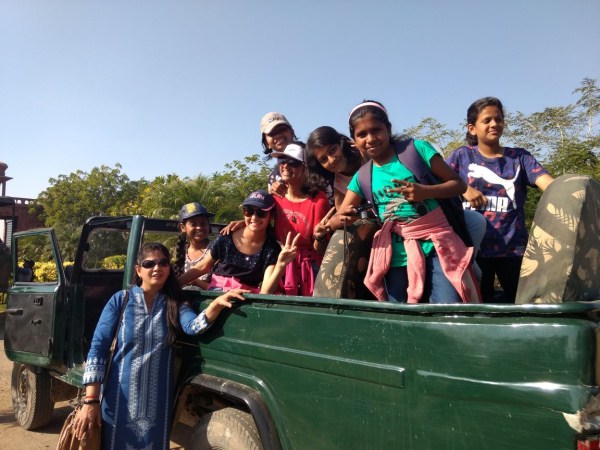
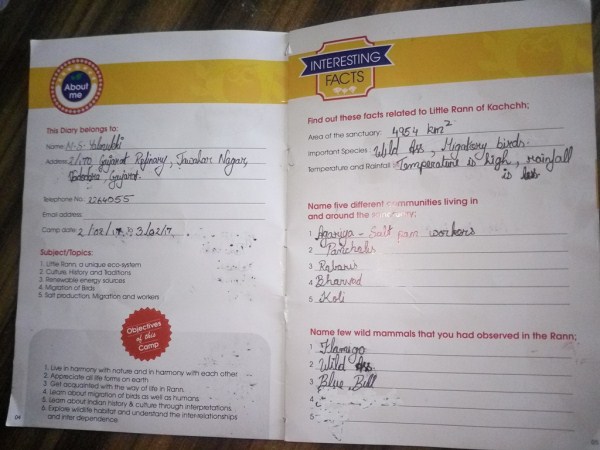
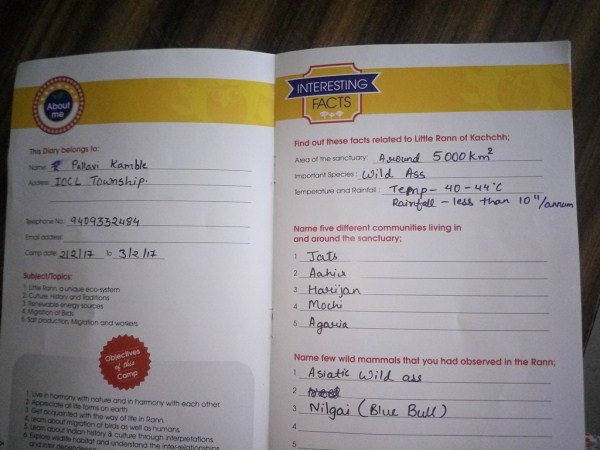
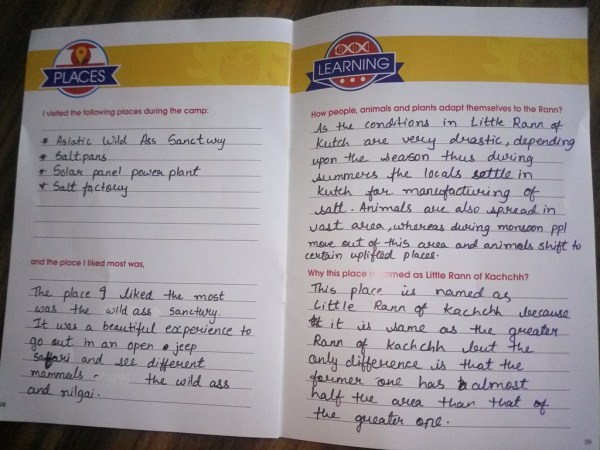
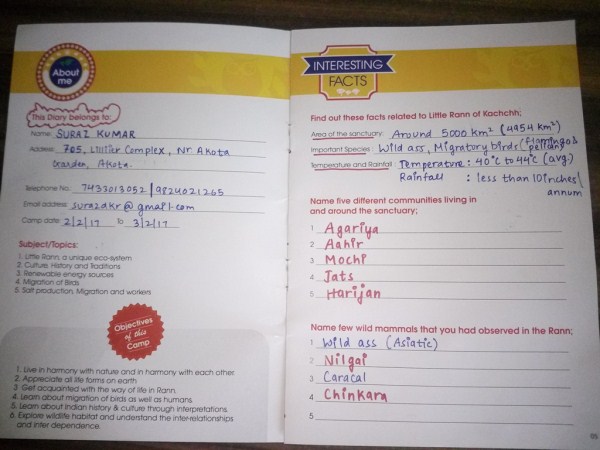
- At 4.00 p.m. learners gathered at Gazebo. There was an interactive session between guide and the learners regarding the terrain and then by Jeep Safari headed towards the site. The volunteers also distributed a booklet for the students to jot down their experience.
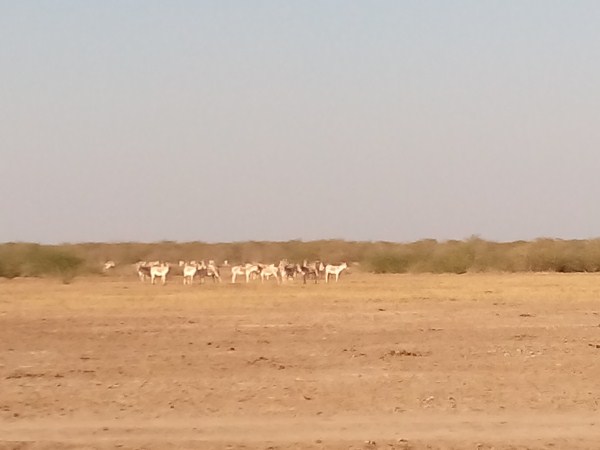
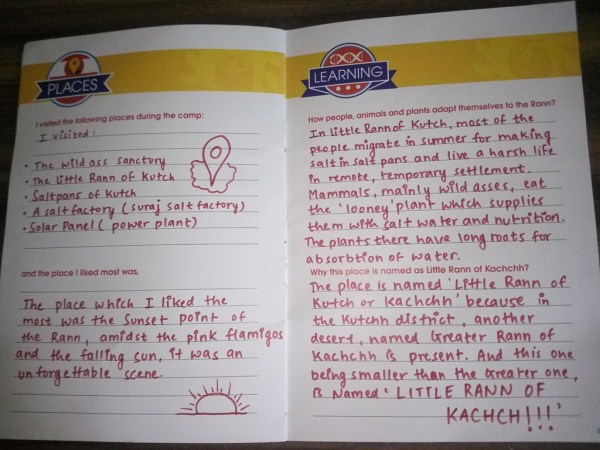
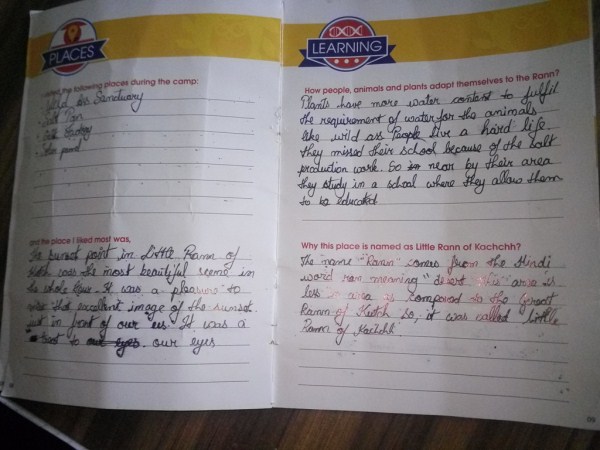
- At around 4:50 p.m. all the jeeps reached a point, saw the most awaited herd of Wild Ass grazing and also a few Blue Bull could be seen. The guide spoke about Wild Ass being endemic only to Little Rann of Kutch in the whole world. He continued that some of the major animals found were Wild Ass, fox, snakes, desert cat, Blue Bull and hare etc. Wild Ass survives only on ‘Luni grass’ as the grass has maximum salt & water. He talked in detail about the reasons for better adaptation of Wild Ass to that particular region.
- Learners saw different migratory birds from Siberia and other far off places like cranes, flamingos, geese, pelicans etc. that are seen between November to March and breed in a bay between India and Pakistan as human beings are unable to reach there.
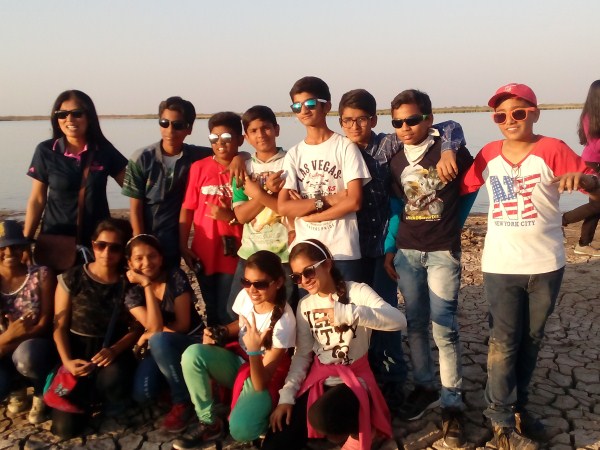
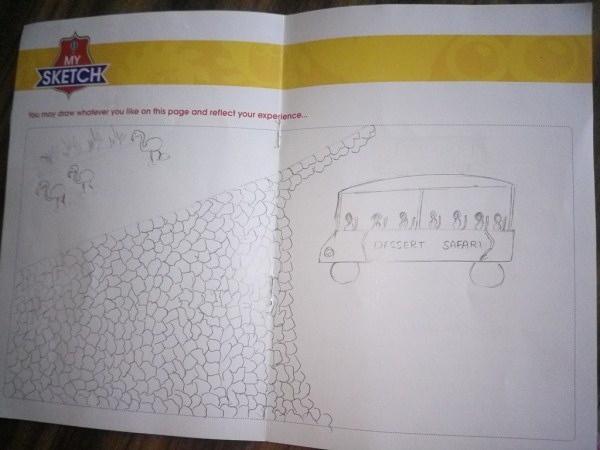
- Students were overwhelmed to witness endless flamingos decorating the river side.
- The guide informed that the inhabitants are into prawns business as ‘Katchhi prawns’ are of best quality. Some of the rivers that empty in Rann of Kutch are Luni, Saraswati, Rupen & Banas, out of which Saraswati river is dried up now.
- The most amazing thing about the place was that the setting sun could be easily visible from a flat ground quite contrary to other sunset points where we had to be at an elevated point to experience it.
- Light snacks followed and they were taken back to resort.
- Having freshened up, dinner was served around 8.00 p.m. The volunteers informed everyone to gather at Gazebo for the campfire at 10 o’clock in which students of Class VII and X presented a skit each based on the learning acquired during their visit to Desert life followed by a group song by students of Class VIII. The guide too entertained the children with an old hindi song and literally translating the same into English sending the children into roars of laughter.
- Teachers & volunteers were quite vigilant and took rounds till 12:45 a.m. (midnight) to assure safety of the learners.
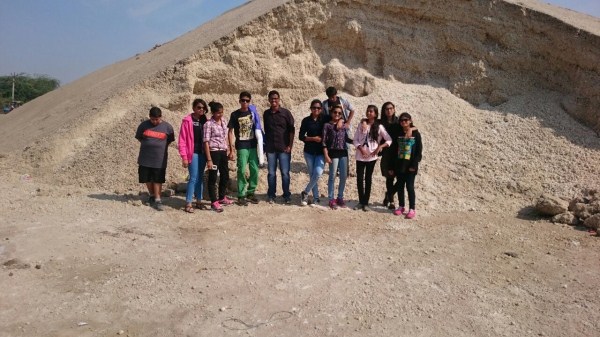
- The second day, the learners visited the Salt farm where Mr. Ashok explained about the salt pan / the salt farm. He explained that the fresh water of Narmada and water from the gulf when mixed form brackish water which when exposed to the sun with a temperature of 25-30 degree, forms different layers of salt, which needs to be ploughed by the farmers to separate the layers and once they are done the raw salt is packed and sent to the factory for iodizing, crushing, filtering and packaging. The factory is run by the government under the banner ‘Hindustan Salt’ which are marketed to other parts of India and Nepal imports 100% of its salt. The by- product of the brackish salt is the Bromine which is produced at a large scale of around 50 tonnes and they are used in making of the medicines.
- The salt farmers are mostly the Agariya community who resides near the salt farm who are paid 100 rupees a day for the labour. Due to their work condition they need to be on the farm round the clock due to which their children could not go to school. So, an NGO named ‘Gantar’ came to their rescue through which the children were taught and certified till primary section by the Government of Gujarat. After the information the students were taken inside the factory in turns and were also allowed to climb the salt hill which all the students did excitedly.
- After the salt farm, we visited a solar power plant which consisted of 4,365 solar panels that generates 5000 power units which is sent to Gujarat Electricity Board on a daily basis. Students quickly took a close look of the power panels and boarded the bus towards the resort.
- Once reached, everyone had lunch and boarded the bus for Vadodara. All the buses halted at Sahayog Hotel at 4:15 p.m. for snacks and relieving themselves then after a quick head count continued the journey.
- All the parents were informed about the various visits and whereabouts of their wards by the Anala groups and by the school portal ‘Between us’. Finally we reached Vadodara at 7:15 p.m., head counts were done and class wise the teachers in - charge handed over the children to their parents.
Post Educational camp Activity:
- Class teachers interacted with the students about their enjoyment and learning through the Educational camp.
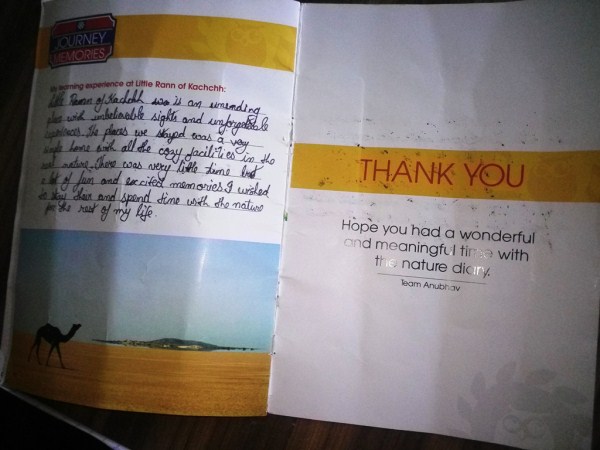
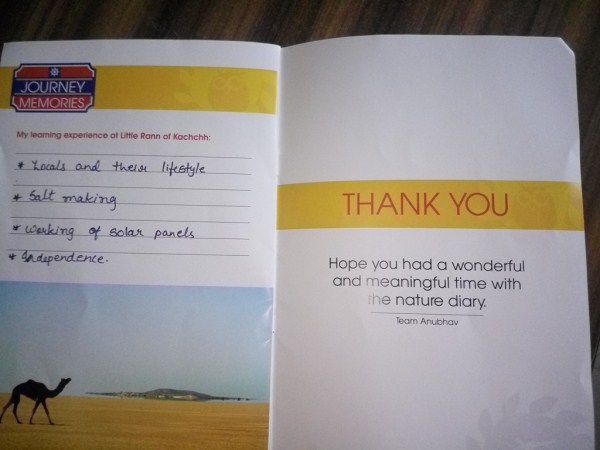
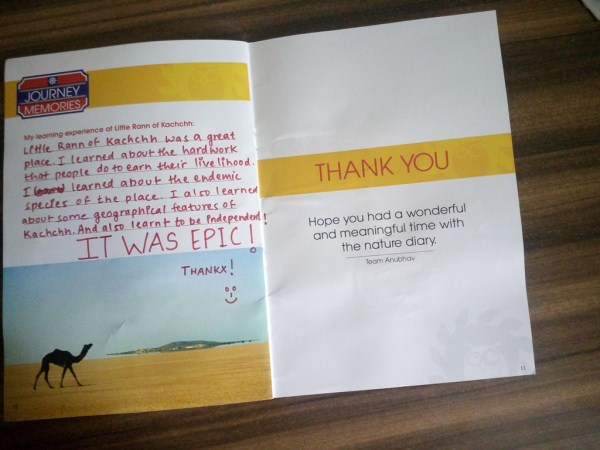
- Children indeed had a life time experience and were quite content with the visit and reflected their experiences through short ‘diary entries’ and ‘write ups’.
- Learners got an idea about the rich cultural heritage of the ’Rann of Kutch’ during their stay there and also got to buy some of the wares of handicraft items made by them which they highly cherished.
- Learners still reflect upon the fast jeep safari with an attempt to overtake the other jeeps through the vast and sprawling Wild Ass Sanctuary which was indeed a thrilling and adventurous experience.
- Learners learned to empathise with the ‘Agiyari community’ who led a harsh life preparing one of the most essential ingredients of food, the salt.